₦58.18trillion and a promise: How Tinubu’s 2026 budget seeks to turn stability into shared prosperity
 admin
Dec 20, 2025 12:46
136
0
admin
Dec 20, 2025 12:46
136
0
By Johnson Arua
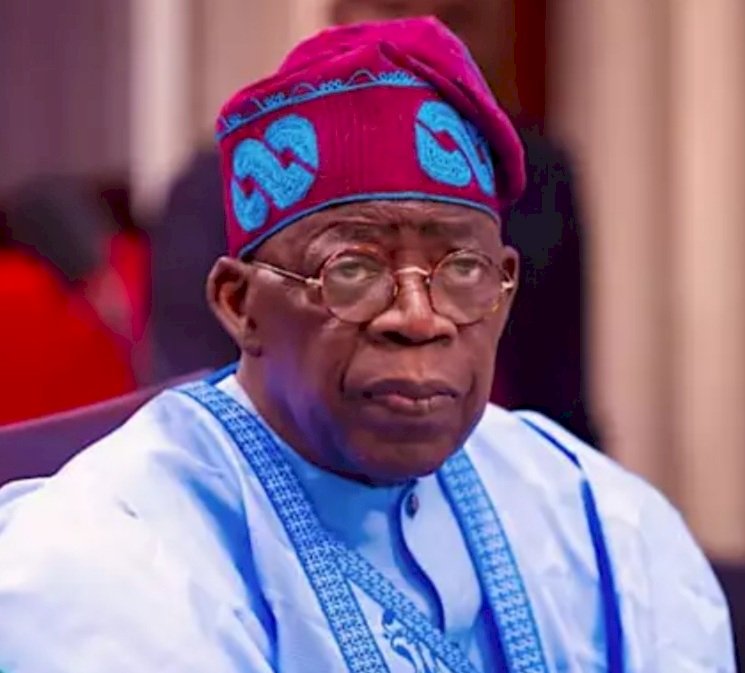
It was a defining afternoon in Nigeria’s democratic journey when President Bola Ahmed Tinubu stepped into the hallowed chambers of the National Assembly and laid before the nation a sweeping vision for the future. At exactly 3:31 p.m., the President began an address that was not merely about figures and fiscal projections, but about trust, sacrifice, and the hard road from economic turbulence to national renewal.
Before lawmakers gathered in joint session, Tinubu presented the ₦58.18 trillion 2026 Appropriation Bill, a proposal he described as a bridge between recovery and prosperity. Christened the “Budget of Consolidation, Renewed Resilience and Shared Prosperity,” the plan carries a deficit of ₦23.85 trillion—about 4.28 per cent of GDP—anchored on targeted revenues of ₦34.33 trillion and bold assumptions aimed at sustaining Nigeria’s economic rebound.
“These numbers are not just accounting lines,” the President declared. “They are a statement of national priorities.”
In a nation long burdened by overlapping budgets and delayed executions, Tinubu made a firm pledge: the era of multiple budget implementations would end. By March 31, 2026, he assured lawmakers, all contracts tied to the 2025 budget would be completed and contractors fully paid. It was a promise of order in public finance—one budget, one framework, one direction.
Beyond the arithmetic, the President painted a picture of cautious optimism. Nigeria’s economy, he said, is showing clear signs of stabilisation. Growth reached 3.98 per cent in the third quarter of 2025, inflation eased for eight consecutive months to 14.45 per cent, and external reserves climbed to a seven-year high of nearly $47 billion. These gains, Tinubu stressed, were not accidental, but the result of “difficult and deliberate policy choices.”
“Our task now,” he said, “is to ensure that stability becomes prosperity, and prosperity becomes shared prosperity.”
The 2026 budget reflects that ambition. Defence and security received ₦5.41 trillion, infrastructure ₦3.56 trillion, education ₦3.52 trillion, and health ₦2.48 trillion, alongside a capital expenditure envelope of ₦26.08 trillion. Agriculture, food security, and human capital development were highlighted as pillars for inclusive growth, while over 418,000 students have already benefitted from the Nigerian Education Loan Fund.
Yet the speech also carried steel beneath its optimism. In a sweeping declaration, Tinubu unveiled a tougher national security doctrine, warning that all armed groups operating outside state authority would henceforth be treated as terrorists. Financiers, enablers, and protectors of violence, he said, would face the full force of the law.
Acknowledging the pains Nigerians have endured over the past two and a half years, the President offered reassurance: the country, he said, has emerged from “the dark tunnel of uncertainty and economic volatility.”
Support echoed from the leadership of the legislature. Senate President Godswill Akpabio, in a wide-ranging welcome address, praised the administration’s courage and called for sustained cooperation between the Executive and the National Assembly. Drawing lessons from global history, he argued that nations rise when institutions work in concert—and falter when rivalry replaces partnership.
“Budgets tell a story,” Akpabio said. “Show me a nation’s budget, and I will tell you its priorities, its fears, and its hopes.”
The Speaker of the House of Representatives reinforced that message, commending Tinubu for restoring fiscal discipline and macroeconomic credibility. He described 2025 as a year of regained stability and renewed confidence, noting that the central task for 2026 would be ensuring that growth translates into jobs, incomes, and real opportunities for Nigerians.
As the President concluded his address at 4:05 p.m., his final words framed the moment not as the end of a process, but the beginning of shared responsibility.
“The greatest budget is not the one we announce,” Tinubu said. “It is the one we deliver.”
With the 2026 Appropriation Bill now before the National Assembly, Nigeria stands at another crossroads—armed with cautious optimism, hard-earned stability, and a national budget that seeks to turn recovery into lasting prosperity. Whether that promise is fulfilled will depend, as both arms of government agreed, on discipline, cooperation, and the will to deliver hope not just on paper, but in the daily lives of Nigerians.