Tinubu tasks North Central leaders on practical solutions to insecurity
 admin
Aug 31, 2026 11:55
32
0
admin
Aug 31, 2026 11:55
32
0
By Johnson Arua
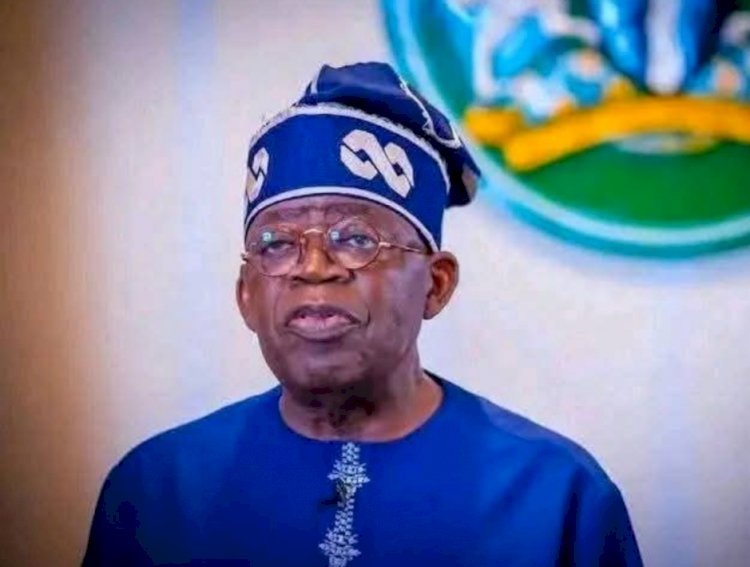
President Bola Ahmed Tinubu has challenged stakeholders in the North Central geopolitical zone to move beyond rhetoric and develop practical, measurable and sustainable solutions to the insecurity ravaging the region.
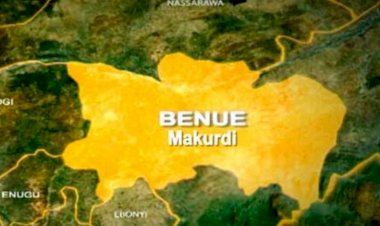
Tinubu, who spoke yesterday at the 2026 North Central Regional Security Summit in Makurdi, Benue State, warned that the gathering must not end with another communiqué that would eventually be forgotten.
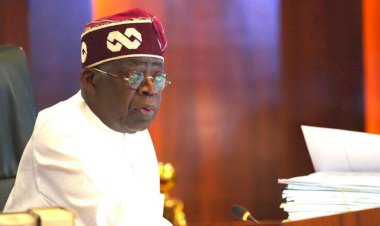
Represented by the Secretary to the Government of the Federation, SGF, Senator George Akume, the President said every recommendation from the summit must have an identified responsibility, timeline and measurable outcome.
“ Nigeria does not need another communiqué to be filed away and forgotten. I expect this gathering to produce clear and practical recommendations, each with an identified owner, a defined timeline and a measurable outcome,” he said.
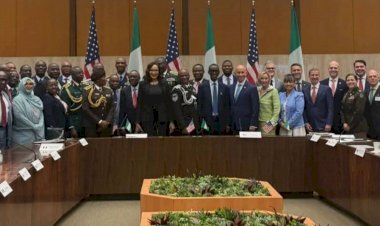
The summit, organised with the theme, “Collaborative Approaches to Strengthening Security and Regional Stability,” brought together governors and representatives from the North Central states, security chiefs, traditional and religious leaders, ministers, community representatives, development partners and other stakeholders.
Tinubu said the security of the region could not be achieved by any single security agency, government or community, noting that criminals operated across state and local government boundaries.
He said the Federal Government had strengthened collaboration among the Armed Forces, Nigeria Police Force and intelligence agencies, while acquiring new platforms and capabilities for the Army, Navy and Air Force.
The President also said the administration was rebuilding Nigeria’s indigenous defence industry through the Defence Industries Corporation of Nigeria, DICON, Act, while improving the welfare of security personnel.
While commending troops and other security personnel for their sacrifices, Tinubu said military action alone could not guarantee lasting peace in the North Central.
“Force can suppress violence; it cannot resolve the grievances that produce it,” he said, identifying competition over land and water, climate change, desertification, unresolved land-use issues, weak local dispute-resolution mechanisms and proliferation of illicit weapons as factors fuelling violence.
He therefore called for a comprehensive security strategy that combines kinetic operations with development, particularly in agriculture, livestock production, rural infrastructure and economic empowerment.
Tinubu said the Federal Government was pursuing the transition from open grazing to modern livestock production through the Ministry of Livestock Development, stressing that the policy was intended to protect farmlands, improve pastoral incomes and reduce farmer-herder conflicts.
He also cited the Reclaiming the Ungoverned Space for Economic Benefits Programme, which he said would leverage the experience of retired military personnel to secure and revive communities recovering from violence.
The President urged traditional rulers and religious leaders to serve as the first line of early warning and trusted voices of reconciliation in their communities.
He also called on citizens, especially youths and women, to provide timely information to security agencies and refuse to shield criminals on the basis of kinship or sentiment.
Tinubu said the success of the summit would ultimately be determined by its impact on ordinary citizens, rather than the quality of speeches and deliberations.
“We will be judged not by the quality of our deliberations here, but by whether a farmer in this region sleeps more soundly a year from now,” he said.
In his welcome address, Governor Hyacinth Alia of Benue State said the summit came at a critical time, given the challenges of banditry, farmer-herder conflicts, kidnapping, violent extremism, organised crime and community displacement across the region.
Alia said the diversity of the North Central should be seen as a strength rather than a source of division, insisting that the multidimensional nature of insecurity required a collective response.
“The moment we set aside our differences to confront the enemy of insecurity; half the battle is already won,” he said.
The governor stressed that collaboration must extend beyond government meetings to traditional institutions and community leaders, who, he said, often receive information about emerging threats before security agencies.
He noted that the strategic importance of the North Central to Nigeria’s food production, commerce, transportation and mineral resources made the security of the region a national concern.
“When the North Central is insecure, it is not only our problem — the whole country feels it on its dining table,” Alia said.
He urged participants to ensure that the summit produced concrete outcomes capable of strengthening the region’s security architecture for years to come.
“I have sat through enough summits in my time to know how easily a good speech can substitute for a good outcome. Let this not be one of those,” he said.
Also speaking, the Minister of Defence, General Christopher Musa (retd.), said stakeholders must stop blaming one another and concentrate on finding solutions to the security crisis.
“This is not a place where we come and throw blames at each other. It is a place where we should find solutions. That’s the only way we can move forward,” Musa said.
He said the Armed Forces and other security agencies could not resolve the crisis without timely intelligence, effective coordination, conflict prevention, responsible governance, community engagement and economic opportunities.
Musa called for an honest assessment of the existing security architecture, particularly coordination, intelligence sharing and cooperation across state boundaries.
“The killing, the shedding of blood is enough. We must have a new North Central region where peace and tranquility exist, and we can achieve that working together as brothers and sisters,” he said.
The minister also urged stakeholders to address farmer-herder tensions by preventing livestock from entering farmlands and ensuring that communities and herders resolved disputes through dialogue.
He said the recommendations from the summit would be presented to President Tinubu for action.
The summit featured presentations by state governors and their representatives, experts and retired security personnel on strategies for tackling insecurity and strengthening regional cooperation.