FG Rejects “Christian Genocide” narrative, Says Extremists Target All Nigerians ..Akume traces terrorism roots, warns U.S. statements embolden violent groups
 admin
Nov 20, 2025 01:31
169
0
admin
Nov 20, 2025 01:31
169
0
By Johnson Arua
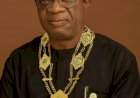
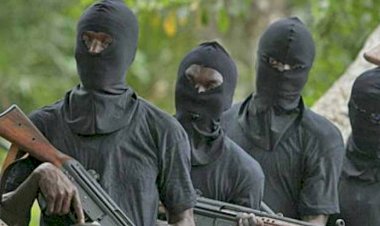
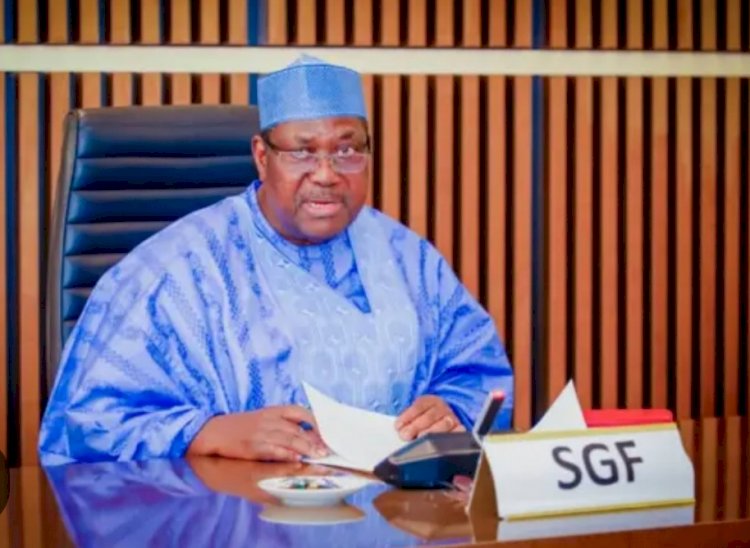
The Secretary to the Government of the Federation (SGF), Senator George Akume, has issued a strongly worded clarification on Nigeria’s evolving security crisis, rejecting claims that Christians are being targeted for genocide and warning that recent U.S. pronouncements have emboldened extremist groups.
In a comprehensive statement released on Wednesday, Akume outlined the historical evolution of Boko Haram, ISIS-affiliated ISWAP, and the economically driven banditry in the North-West, insisting that the violence in Nigeria is neither religious nor genocidal, but a complex mix of ideological extremism, criminal enterprise, and economic opportunism.
“No Evidence of Christian Genocide,” FG Insists
Akume stated unequivocally that Nigeria rejects the classification of the conflict as a genocide against Christians or any group.
“No credible international institution has designated the crisis as genocide against Christians,” he said.
“Boko Haram and ISWAP kill Muslims and Christians alike, and bandits conduct attacks without any religious distinction. Victims cut across Christians, Muslims, and traditionalists.”
He stressed that mischaracterising the multi-layered crisis as a religious purge is not only inaccurate but also dangerous.
“This misrepresentation fuels sectarian tension, emboldens extremist propaganda, and undermines Nigeria’s longstanding international security partnerships,” Akume warned.
Origins of the Crisis: “Nigeria Became a Battlefield for Global Extremist Currents”
Tracing the roots of the insurgency to the early 2000s, the SGF noted that Boko Haram began as a small extremist sect but later drew inspiration and tactical support from global jihadist movements.
“What started as a local extremist movement quickly aligned with Al-Qaeda’s ideological current and later transitioned to ISIS influence,” he explained.
Nigeria’s instability, he said, was compounded by the fall of Libya and Egypt in 2011.
“The collapse of Libya allowed the looting of heavy weapons that flooded the Sahel. These weapons, moved through AQIM-controlled smuggling routes, strengthened Boko Haram, ISWAP, and later banditry networks,” Akume said.
North-West Banditry is Economic, Not Religious
The SGF emphasised that the rise of North-West banditry from 2018 is driven purely by economic incentives, not ideology.
“The motivation remains overwhelmingly economic. These groups are driven by illegal mining, cattle rustling, kidnapping-for-ransom, extortion and control of agricultural corridors—not religion,” he noted.
He listed drivers including desertification-induced resource conflicts, cross-border livestock markets influenced by AQIM routes, and Nigeria’s lucrative illegal gold trade.
Yelewata Killings: Over 100 Dead, Presidential Action Triggered
Akume highlighted recent mass casualties, particularly the June 2025 Yelewata attack in Benue State.
“At least 100 people were killed, according to Amnesty International and global news agencies. Houses were destroyed and thousands displaced,” he stated.
He disclosed that President Bola Tinubu immediately deployed him to the crisis epicentre with relief materials and later visited survivors personally.
“The President ordered a full census of casualties and destruction, and has approved funding for the reconstruction of affected communities,” he said.
U.S. Pronouncements Have “Unintended Consequences”
In one of the most pointed sections of the statement, Akume criticised recent U.S. comments on Nigeria’s security situation.
“These pronouncements have inadvertently emboldened opportunistic violent groups seeking to exploit international narratives,” he said.
He noted that before these remarks, insurgency networks had been substantially degraded.
“We had reduced these groups to isolated banditry. Their sudden resurgence highlights the need for collaboration—not public labeling,” he stressed.
Nigeria Does Not Need Foreign Troops
While acknowledging the need for international support, Akume emphasised that Nigeria’s military remains strong and capable.
“The Nigerian Armed Forces are highly professional and experienced. They have reclaimed vast territories and degraded terrorist leadership structures,” he said.
“Nigeria does not require foreign troops—what we need are enhanced intelligence cooperation, technology and advanced equipment.”
Nigeria Remains a Secular State
The SGF reaffirmed Nigeria’s constitutional secularism, responding to insinuations that government appointments are religiously skewed.
> “Nigeria adopts no state religion. Our appointments reflect national diversity. Christians and Muslims serve in equal measure within the Federal Executive Council and even in the Security Council,” he clarified.
Way Forward: Five-Point National Security Strategy
To address the security crisis more sustainably, Akume outlined a multi-pronged plan:
1. Strengthening nationwide security operations.
2. Deepening intelligence-sharing with the U.S. and allies.
3. Intensifying follow-the-money operations, especially targeting illegal mining.
4. Enhancing rural security, border monitoring and governance.
5. Upholding strict human rights safeguards.
He said Nigeria and the United States—two of the world’s largest democracies—share a responsibility to promote global stability and counter extremism.
“A Call for Unity”
Akume closed with a passionate appeal to Nigerians:
> “Now is the time for all Nigerians—regardless of tribe, religion or political persuasion—to speak with one strong and united voice. We must confront and completely eradicate terrorists, bandits and extremists from our national borders.”
The SGF reaffirmed that Nigeria remains committed to deepening diplomatic ties and strengthening international partnerships, but on the basis of mutual respect, accuracy, and collaboration.