UNICEF engages stakeholders to shape 2028–2032 Country Programme Document for children, women
 admin
Jul 13, 2026 12:13
26
0
admin
Jul 13, 2026 12:13
26
0
By James Ike
The United Nations Children's Fund (UNICEF) has commenced sub-national consultations with stakeholders from its priority states under the Enugu Field Office as part of efforts to develop its 2028–2032 Country Programme Document (CPD), a strategic roadmap designed to strengthen policies and interventions that promote the rights and well-being of children and women across Nigeria.
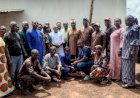
The consultation, which brought together media practitioners and other development partners, focused on reviewing evidence, identifying major child rights deprivations and agreeing on priorities that will shape UNICEF's next five-year programme in line with national and global development agendas.
Speaking at the opening session, the UNICEF Chief of Field Office, Enugu, Mrs. Juliet Chiluwe, represented by the Planning and Monitoring Specialist, Mrs. Maureen Zubie-Okolo, described the Country Programme Document as the organisation's key strategic framework for supporting the Federal Government in advancing the rights, survival and development of children and women.
She explained that the 2028–2032 programme would be jointly designed with governments and partners at both national and sub-national levels to ensure alignment with the African Union Agenda 2063, UNICEF Strategic Plan (2026–2029), Nigeria's National Development Plan and other international development commitments.
"Building on lessons from the 2023–2027 programme cycle, the 2028–2032 Country Programme will prioritise transformative strategies that deliver impact at scale through policy advocacy, systems strengthening and multisectoral partnerships, while remaining adaptive to future shocks and uncertainties," Chiluwe said.
She noted that the consultation would help identify the most pressing child rights deprivations in the region, examine the factors driving them and develop practical, evidence-based solutions capable of delivering sustainable results.
According to her, deliberations covered critical sectors including health, nutrition, education, Water, Sanitation and Hygiene (WASH), child protection, social policy, social and behaviour change, as well as communication, advocacy and partnerships.
In a welcome address, the Executive Secretary of the Enugu State Economic Planning Commission, Mr. Nnanyelugo Dan Onyishi, represented by the Head of Donor Coordination, Monitoring and Evaluation Department, Mrs. Henrietta Nzekwe, commended UNICEF for its enduring partnership with the Enugu State Government.
She described the consultation as timely, saying it provides an opportunity to review progress made in improving child welfare, identify persistent challenges and define evidence-driven priorities that will support the implementation of Nigeria's National Development Plan, Agenda 2050, Agenda 2063 and the Sustainable Development Goals (SDGs).
"The outcomes of this consultation should not only inform UNICEF's next Country Programme but also strengthen our collective efforts to achieve inclusive and sustainable development in Enugu State and Nigeria as a whole," she said, urging participants to contribute meaningfully to the discussions.
Contributing, the Head of the Department of Mass Communication at Enugu State University of Science and Technology (ESUT), Dr. Ezinnwa Chidiebere, said the institution's collaboration with UNICEF had helped integrate child rights issues into its academic curriculum.
"We came to plan ahead to ensure that in the future we bring about innovation in programming so that the gaps identified in the promotion and protection of children's rights are addressed in future interventions," Chidiebere said.
The consultation is part of UNICEF Nigeria's nationwide engagement with stakeholders in preparation for the 2028–2032 Country Programme Document, which will serve as the blueprint for interventions aimed at improving the survival, development, protection and participation of every child in Nigeria over the next five years.