Benue convenes monthly Check-in meeting to strengthen humanitarian, development interventions
 admin
Oct 16, 2026 10:09
9
0
admin
Oct 16, 2026 10:09
9
0
By Tolu Temidire
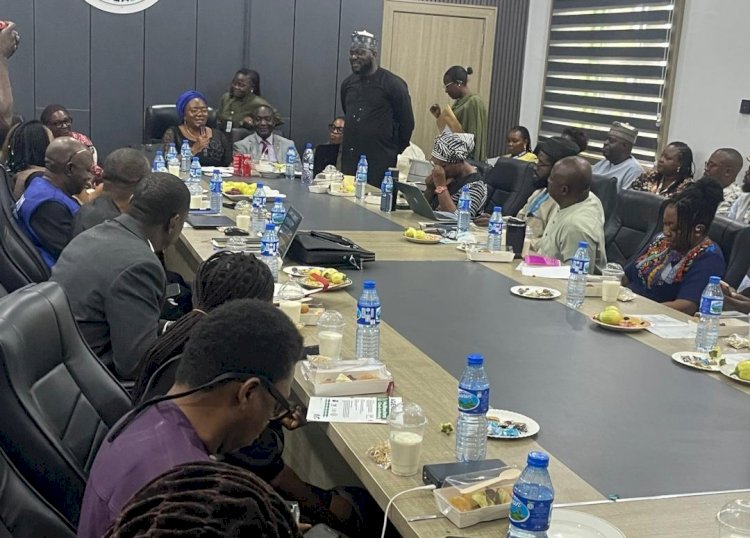
The Benue State Bureau for International Cooperation and Development (BICD) has convened a monthly check-in meeting of International Non-Governmental Organisations (INGOs), United Nations agencies, civil society organisations (CSOs) and development partners to strengthen coordination, accountability and the delivery of humanitarian and development interventions across the state.
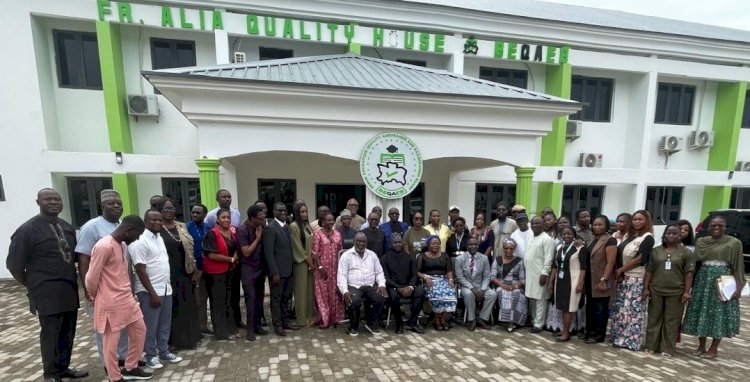
The meeting, held at the Benue State Education Quality Assurance and Examination Board (BEQAEB), Makurdi, was convened under the leadership of the Secretary to the State Government (SSG), Mrs Deborah Aber, who represented Governor Hyacinth Alia, and sponsored by the United Nations Population Fund (UNFPA).
It brought together more than 60 International Non-Governmental Organisations, INGOs, CSOs, development partners, UN agencies and representatives of Ministries, Departments and Agencies, MDAs, of the state government to review ongoing interventions, identify gaps and explore ways of improving support for vulnerable communities.
Addressing participants, Aber said the monthly engagements should go beyond routine updates to provide opportunities for stakeholders to identify challenges, share information and jointly develop practical solutions that would maximise the impact of interventions in the state.
She said, “These meetings must go beyond routine updates. They should provide opportunities to identify gaps, share information and, most importantly, co-create practical solutions that maximise the impact of our collective efforts.”
The SSG, who appreciated the continued commitment of development partners to Benue's humanitarian and development priorities, stressed that the success of their interventions should be measured by the positive and lasting changes they brought to people's lives.
“Our State values the contributions of development partners across emergency response, healthcare, education, livelihoods, protection and peacebuilding. However, our success must be measured not simply by the number of interventions or resources mobilised, but by the lasting difference we make in the lives of our people,” she said.
Aber noted that although emergency response remained indispensable in a state confronted by displacement and insecurity, humanitarian assistance should also provide a foundation for recovery and sustainable development.
According to her, “Timely humanitarian assistance saves lives, protects vulnerable populations and supports communities facing displacement and insecurity. We must not diminish this responsibility. Rather, emergency response should also serve as a foundation for recovery, resilience and sustainable development.”
She urged development partners to strengthen collaboration with government institutions through joint assessments, integrated programming, complementary financing and the pooling of expertise and resources.
She also emphasised the need to connect emergency interventions with longer-term investments in agriculture, livelihoods, healthcare, education, water, sanitation and community infrastructure to reduce future vulnerabilities.
On the need to expand the reach of development interventions, Aber called for greater attention to underserved communities experiencing insecurity, loss of livelihoods and disrupted access to essential services.
She urged partners to work with BICD and relevant MDAs to identify such locations through credible data, coordinated assessments and community engagement, warning against concentrating interventions only in familiar areas where partners already operated.
“Our resources must be directed according to assessed needs and opportunities for sustainable impact, ensuring that vulnerable communities are not overlooked simply because they fall outside established intervention areas,” the SSG said.
She further stressed that localisation must remain central to development partnerships, with government institutions, local organisations and communities meaningfully involved in designing, implementing and sustaining programmes to strengthen local capacity and accountability.
Addressing the plight of displaced persons, Aber said the state's response must extend beyond the provision of immediate relief to creating conditions that would enable affected people to return voluntarily to their communities, integrate locally or pursue other appropriate solutions in safety and dignity.
She said achieving durable solutions required coordinated investments in livelihoods, essential services, peacebuilding and resilient community infrastructure, while ensuring that host communities were not neglected.
The SSG acknowledged the contributions of the United Nations and development partners to discussions on durable solutions and the state's action plan, but urged them to translate their commitments into practical programmes backed by adequate resources.
She also called for regular information-sharing on intervention locations, target populations, activities and results, stressing that knowing “who is doing what, where and with what outcomes” was essential to reducing duplication, identifying gaps and improving resource allocation.
Earlier, the Director-General of BICD, Dr Leo-Angelo Viashima, said the meeting was convened to fulfil the Bureau's coordination mandate and provide the Governor with adequate information on the activities of development partners operating in the state.
He described the gathering as a pause-and-reflect platform through which government and partners could review ongoing interventions, identify unresolved challenges and determine areas requiring additional support.
He said the monthly platform would strengthen information-sharing and align interventions with government priorities.
Viashima explained that the meetings would enable partners to present their activities and challenges while allowing government officials to understand their operations and provide support where necessary.
“We need to know what they are doing, we need to agree with what they are doing and we also need to know how we can support them on the government side,” he said, adding that the platform was designed to ensure that emerging issues were identified and addressed rather than overlooked.
He described the engagements as an accountability mechanism involving both parties, saying, “It's an accountability meeting where partners are accountable to government, government is also accountable to partners.”
According to him, Commissioners and other government officials attended to listen to the partners, just as the organisations had the opportunity to hear from government representatives. He said the meetings would be held monthly, noting that UNFPA facilitated the latest edition.
The Commissioner for Health and Human Services, Dr Paul Ogwuche, commended BICD for coordinating development partners and promoting collaboration aimed at improving the impact of their interventions.
He urged the Bureau to sustain the meetings, saying regular engagements would enable government and partners to perform better in their respective areas of responsibility.
He also called on the organisations to continue working with the state government to address the challenges confronting residents and improve their living conditions.
Also speaking, Henry Akya, the Benue State representative of Tetra Tech International Development's Strengthening Peace and Resilience Programme, described the meeting as an important platform for coordinating humanitarian response, development and peacebuilding activities.
He recommended that the engagements should take place regularly arguing that more frequent meetings would help stakeholders identify gaps, avoid duplication and channel resources to communities where they were most needed.
Akya said the gathering had brought together key stakeholders working across the humanitarian-development-peace nexus, providing an opportunity to examine achievements, discuss challenges and agree on the way forward.
“Until this meeting happens, it is very difficult to understand where the gaps are because some other communities, you will end up having excessive partners' intervention,” he said. He added that regular coordination would help partners determine where new interventions were needed and where existing resources should be redirected.
The meeting, attended by more than 60 CSOs, United Nations agencies, INGOs, development partners and representatives of government MDAs, featured presentations on ongoing activities, challenges and results across the state.
Stakeholders called for sustained engagements to ensure that humanitarian assistance, recovery programmes and long-term development initiatives reach vulnerable communities and produce measurable results.