Benue Justice system under scrutiny as committee flags delays, rights violations
 admin
Apr 1, 2026 06:16
130
0
admin
Apr 1, 2026 06:16
130
0
By Johnson Arua
The Independent Administration of Criminal Justice Law (IACJL) State Level Monitoring Committee has raised serious concerns over persistent delays in the administration of justice in Benue State, attributing the situation to poor enforcement and disregard for the provisions of the Administration of Criminal Justice Law (ACJL).
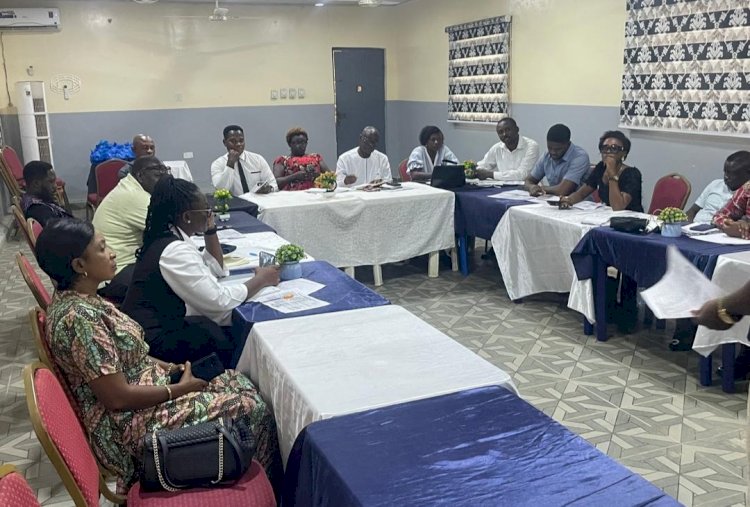
The committee made the disclosure in Makurdi during a one-day validation meeting supported by CLEEN Foundation with funding from the Norwegian Embassy.
The session brought together justice sector stakeholders and the media to evaluate gaps in the implementation of the law.
Chairman of the committee, Mrs. Victoria Daaor, described the body as a multi-stakeholder platform set up to complement existing justice institutions in the state.
She explained that the committee collaborates with agencies including the Ministry of Justice, Nigeria Police Force, Correctional Service, and human rights bodies.
“We are here to support and strengthen the administration of criminal justice in the state by ensuring that the right processes are followed,” Daaor said, adding that the committee is focused on promoting accountability and institutional reforms.
According to her, one of the key mandates of the committee is to enhance access to justice, particularly for inmates without legal representation. She noted that the group also identifies systemic and knowledge gaps and works with partners to address them.
Daaor revealed that shortly after its inauguration on October 16, 2025, the committee embarked on advocacy visits to critical stakeholders, including the Attorney General, Commissioner of Police, and Commissioner for Women Affairs and Social Welfare.
She said visits to correctional facilities in Makurdi and Gboko exposed alarming conditions and deep-rooted structural challenges. “There are serious legal aid gaps and infrastructural deficiencies. The correctional centres fall far short of acceptable standards,” she stated.
Highlighting the condition of detention facilities, she added, “The environment is not conducive for rehabilitation. Even the staff are working under very difficult conditions, which affects overall efficiency.”
Daaor also stressed that some inmates require more than legal assistance, pointing to the need for psychiatric and psychosocial support. She called on civil society organisations and the media to intensify advocacy and public enlightenment on justice sector reforms.
Vice Chairman of the committee, Mrs. Awashima Addingi, decried the prolonged detention of inmates without trial, describing it as a violation of the ACJL.
She disclosed that several inmates have remained in custody far beyond the legally stipulated timeframe.
“The law clearly states that trials should be concluded within three months, yet we have individuals who have spent up to three years in detention without their cases even commencing,” Addingi said.
She further noted that many detainees are being held for minor offences but have already exceeded the maximum sentence prescribed by law. “Some inmates accused of petty offences have stayed longer in custody than the punishment their offences attract. That is a clear denial of justice,” she said.
Addingi also expressed concern over cases where bail has been granted but not implemented, as well as alleged interference by influential individuals. “There are instances where certain persons insist that suspects must remain in custody, regardless of legal provisions,” she added.
Speaking on behalf of Civil Society, Member ACJL Monitoring Committee in Benue State, Victor Eboh, described the ACJL monitoring structure as a statutory mechanism involving top justice sector officials, including the Chief Judge and heads of law enforcement agencies.
He noted that the committee has, in the past, facilitated the release of detainees, especially those held for minor offences. “There have been instances where magistrates discharged inmates on the spot following our intervention,” Eboh said.
He however, lamented that political interference has slowed down the effectiveness of the system. He pointed to the continued use of holding charges by the police as a major contributor to congestion in correctional facilities.
“The ACJL provides for administrative bail where investigations are incomplete, but this provision is often ignored. Instead, suspects are kept in custody for extended periods,” he said.
He concluded that strict compliance with the ACJL is critical to addressing delays in the justice system. “Until there is full adherence to the law and due diligence by all actors, the problem of delayed justice will persist,” Eboh warned.