Benue moves to strengthens Lassa Fever response with support from partners
 admin
Mar 5, 2026 04:40
146
0
admin
Mar 5, 2026 04:40
146
0
By Johnson Arua
The Benue State Ministry of Health and Human Services has intensified collaboration with key development partners to strengthen the state’s response to the ongoing Lassa fever outbreak.
The move follows rising cases since the disease was officially declared in the state on February 3, 2026.
This formed the focus of a strategic stakeholders’ meeting convened at the ministry, bringing together major health partners and professionals working to contain the outbreak and improve emergency response efforts.
Welcoming participants, the Commissioner for Health and Human Services, Dr. Paul Ejeh Ogwuche expressed appreciation to the partners for their continued support to the state’s health sector.
He noted that collaboration remains critical to tackling the public health challenge and strengthening response mechanisms.
“Our collective efforts are vital in addressing the outbreak effectively. We deeply appreciate the commitment of our partners who have continued to stand with the state during this period,” Ogwuche said.
The engagement brought together representatives from the Nigeria Centre for Disease Control and Prevention (NCDC), the World Health Organization (WHO), the United Nations Children’s Fund (UNICEF), and Médecins Sans Frontières (MSF), all of whom are actively supporting the state’s emergency response.
As part of coordinated response measures, the stakeholders conducted visits to designated isolation centres and molecular laboratories across the state. The visits were aimed at assessing operational capacity, reviewing ongoing interventions, and identifying critical gaps requiring urgent attention.
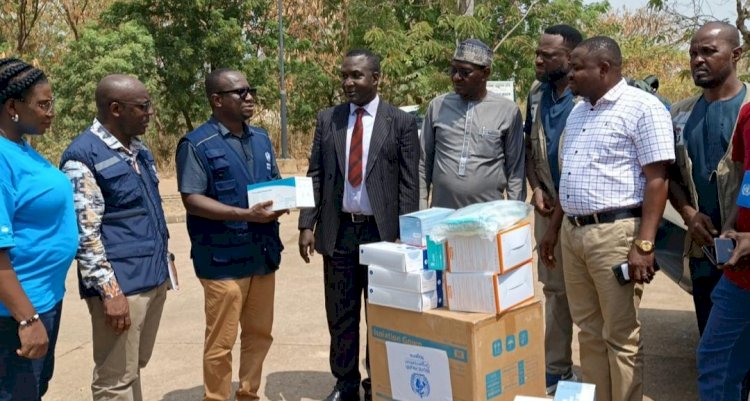
During the meeting, the World Health Organization presented Personal Protective Equipment (PPE) to the ministry to support frontline health workers involved in managing the outbreak. The donation is expected to enhance infection prevention and control measures and improve the safety of health personnel handling Lassa fever cases.
Representatives of the NCDC noted that previous assessments had revealed gaps in surveillance, case management, and infection prevention and control systems.
They recommended targeted interventions to strengthen the state’s response capacity and prevent further spread of the disease.
The WHO delegation stressed the urgency of implementing immediate protective measures, particularly to reduce infections among healthcare workers and reinforce safety systems within health facilities.
Similarly, UNICEF outlined plans to intensify risk communication and community engagement to encourage early reporting of symptoms and promote preventive practices among residents.
Médecins Sans Frontières also reaffirmed its commitment to supporting the state with technical and operational assistance while helping to address both short-term and medium-term challenges affecting effective outbreak control.
In his remarks, Dr. Ogwuche commended the partners for their unwavering support and reaffirmed the commitment of the Benue State Government to strengthening collaboration to address identified gaps.
“The interventions currently underway align with the health sector development agenda and the vision of Governor Hyacinth Alia, which prioritizes improved healthcare delivery and the wellbeing of the people of Benue State,” he said.
The meeting ended with stakeholders renewing their commitment to stronger coordination and enhanced technical support aimed at effectively bringing the Lassa fever outbreak under control in the state.