Lassa fever outbreak in Benue state claims 10 lives, infects 45 as health workers among victims
 admin
Feb 28, 2026 03:32
285
0
admin
Feb 28, 2026 03:32
285
0
By Benedicta Aboh
Benue State is facing a serious outbreak of Lassa fever, with 45 confirmed cases and 10 deaths recorded from 250 suspected infections statewide. Health officials have described the situation as worrisome, particularly due to rising infections among frontline medical workers.
The State Epidemiologist, Dr. Msuega Asema, revealed the figures during an inspection visit by the Commissioner for Health and Human Services, Dr. Paul Ogwuche, to isolation centres at Benue State University Teaching Hospital and Federal Medical Centre Apir, where patients are undergoing treatment.
Dr. Asema reported that several healthcare personnel have contracted the virus, including five doctors, four nurses, two community health extension workers and a hospital porter. He warned that the increasing infections among medical staff point to gaps in infection prevention and control measures.
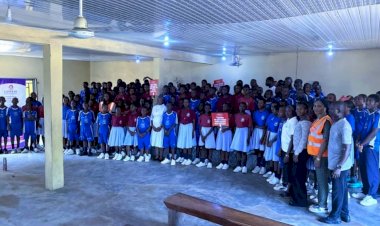
Addressing staff and patients at both facilities, Dr. Ogwuche urged residents to remain calm despite the rising numbers. He noted that the state government officially declared the outbreak on February 3 and has since intensified response efforts.
According to the commissioner, the visit was intended to assess conditions on the ground, encourage patients, and reassure them of the government’s full support. He stressed that stopping human-to-human transmission remains a top priority, describing it as a major factor fueling the outbreak.
Dr. Ogwuche added that although the figures appear concerning, the administration of Governor Hyacinth Alia has mobilised the resources needed to contain the disease.
“Surveillance teams have been deployed across all 23 local government areas to strengthen contact tracing, community engagement and early detection,” he said.
He also encouraged residents to promptly report symptoms such as fever, weakness, headache and bleeding at designated health facilities, emphasizing that early diagnosis and treatment are vital to reducing fatalities.
The commissioner commended health workers for their dedication and extended condolences to families who have lost loved ones, reaffirming the government’s commitment to safeguarding public health.
At Benue State University Teaching Hospital, the Chief Medical Director, Dr. Stephen Hwande, outlined measures already implemented to curb the outbreak. He called for urgent upgrades to isolation centres, including additional patient monitors, improved waste disposal systems and the establishment of a functional emergency laboratory for on-site testing.
The Chairman of the hospital’s Medical Advisory Committee, Prof. Michael Agbir, described the outbreak as unusually severe compared to previous years. He disclosed that between January and February 2026, the hospital recorded 28 admissions, 17 confirmed cases and three deaths, indicating a sharp increase in infections.
At Federal Medical Centre Apir, Chief Medical Director Prof. Joseph Kontor — represented by Dr. Uche Azuka — said the facility’s molecular laboratory conducts diagnostic tests for COVID-19, Lassa fever, chickenpox, cholera, hepatitis B and C, among other diseases.
However, he noted that erratic electricity supply has significantly disrupted operations.
Prof. Kontor appealed to the state government for support, explaining that unreliable power makes timely testing and prompt results difficult. He also requested additional consumables and personal protective equipment, noting that patients are currently receiving free treatment and discharge.
The Coordinator of the Isolation Centre and Head of Clinical Services at the hospital, Dr. Michael Odoh, said 10 patients are currently admitted, including eight confirmed and two suspected cases. Of the confirmed cases, four are health workers — two nurses, one doctor and a porter — all of whom are responding well to treatment. He added that three doctors are in self-isolation and recovering, offering a measure of hope amid the escalating public health crisis.