Revisit Electoral Act, real-time results transmission key to restoring trust in elections — Catholic Bishops tell NASS
 admin
Feb 22, 2026 08:35
64
0
admin
Feb 22, 2026 08:35
64
0
By Johnson Arua
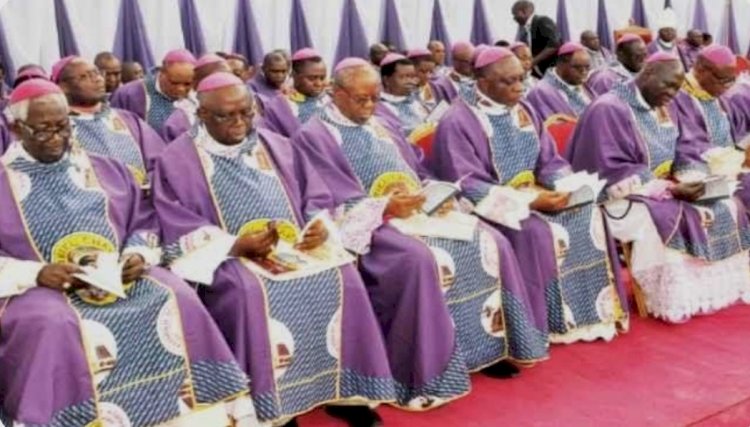
The Catholic Bishops Conference of Nigeria (CBCN) has urged the National Assembly to urgently revisit its position on electoral reforms and enshrine mandatory real-time transmission of election results in the Electoral Act, warning that dwindling voter turnout threatens the survival of Nigeria’s democracy.
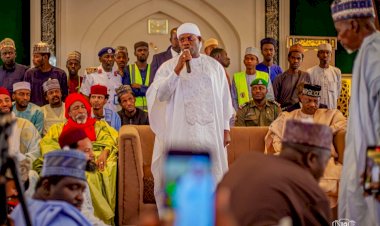
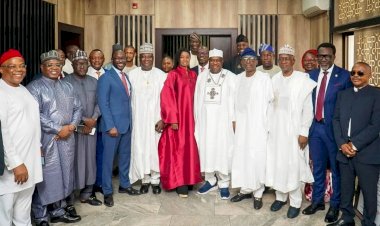
President of the CBCN, Most Rev. Lucius Iwejuru Ugorji, made the call on Sunday in Abuja at the opening session of the 2026 First Plenary Meeting of the Conference themed “The Common Good and Leadership in Nigeria.”
He cautioned that the steady decline in voter participation reflects a growing loss of public confidence in the country’s electoral process.
Delivering his final address as CBCN President after completing his four-year tenure, Bishop Ugorji described the trend in voter turnout as alarming and dangerous for democratic legitimacy.
“In 2003, the turnout was 69 per cent. In 2007, it was 57 per cent; in 2011, 54 per cent; in 2015, 43.65 per cent; in 2019, 35.66 per cent; and in 2023, it dropped to 23 per cent,” he noted.
“This decline says a lot about citizens’ trust in the electoral process and calls into question the legitimacy of elected officials in a democratic dispensation with the mandate of an ever-decreasing minority.”
He warned that if the downward slide continues, it would “inflict a disastrous blow to democracy in Nigeria.”
To rebuild public trust, the bishops called on federal lawmakers to ensure that election results are mandatorily transmitted in real time from the Bimodal Voter Accreditation System (BVAS) at polling units directly to the Independent National Electoral Commission (INEC) Result Viewing Portal.
“The Electoral Act should provide for the mandatory transmission of election results in real time from the BVAS at the polling unit to the INEC Result Viewing Portal at the Commission’s headquarters to prevent any human tampering with the expressed will of the electorate. This is the will of the people and has to be respected,” Ugorji stated.
He criticised what he described as inconsistency on the part of lawmakers, noting that while the National Assembly had passed legislation mandating digital tax filing and payments nationwide, it appeared reluctant to institutionalise similar digital transparency in the electoral system.
“The honourable members of the National Assembly should not allow themselves to be perceived as talking out of both sides of the mouth, expressing inconsistent and contradictory positions in the process of passing bills. The world is watching! Above all, God is also watching,” he said.
Beyond electoral concerns, the CBCN President expressed deep worry over Nigeria’s worsening security crisis, lamenting what he termed “senseless massacres, mass burials, endless tears and grief” across parts of the country.
He referenced recent killings in communities in Kwara State, where over 200 villagers were reportedly killed, and faulted what he described as a largely reactive approach by security agencies.
“With threats of killing their captives, they demand huge ransoms and even brazenly brandish on social media the ransom they have collected without disguising themselves. Yet, they are not arrested through their digital footprints,” he said.
“The largely reactive or rather counter-attack approach has not been very effective in protecting vulnerable communities. This approach is like administering medicine after death.”
Ugorji urged the government to prioritise investment in modern surveillance technology and intelligence gathering, insisting that perpetrators of terrorism, banditry and kidnapping must be “swiftly arrested, prosecuted and held accountable under the law.”
On the issue of illegal mining, he described the practice as “national economic sabotage,” alleging that Nigeria loses about $9 billion annually to illicit mineral trade.
“Criminal groups use proceeds from the sale of minerals to buy weapons and fund terrorist activities across the country,” he said, calling for the deployment of drones and artificial intelligence to monitor remote mining sites.
The cleric further identified poor leadership and a flawed understanding of politics as the root causes of Nigeria’s persistent challenges.
“We must concede that the root of our afflictions as a nation is largely the problem of poor leadership and the wrong perception of politics among many of our leaders — merely as the rigging of elections and stealing of other peoples’ mandate; the amassing of ill-gotten gains,” he said.
Quoting Pope Benedict XVI, he added, “A State which is not governed according to justice would be just a bunch of thieves.”
He emphasised that political leadership should serve the common good and urged Nigerians to prioritise integrity, competence and a genuine commitment to service when electing their leaders.